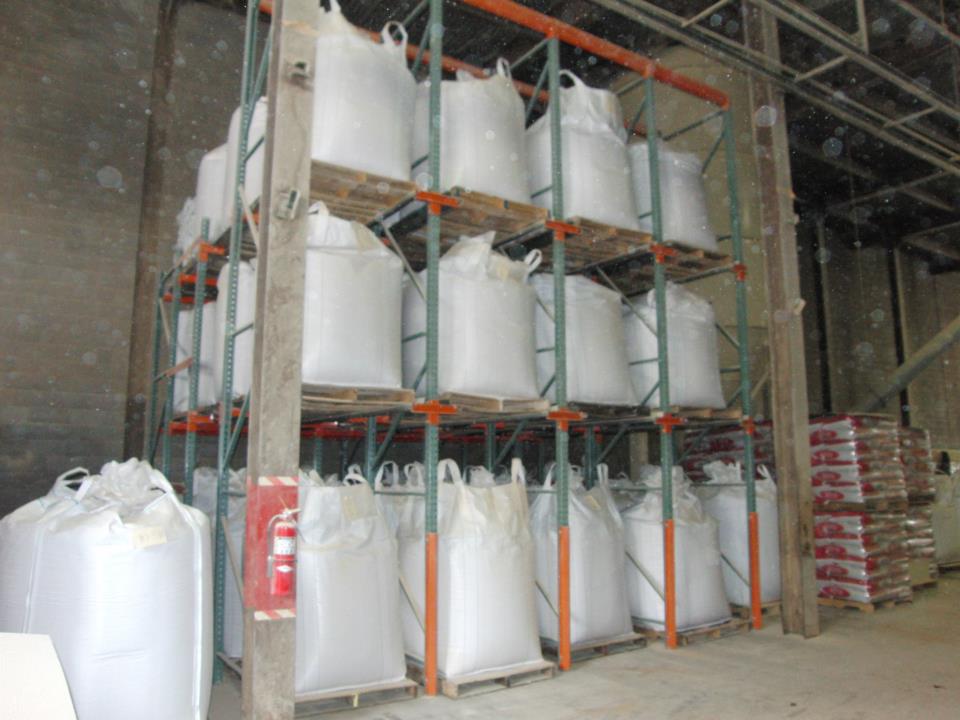
Drive-In Rack in Grand Prairie, TX
Grand Prairie's share of the Great Southwest Industrial District puts production and distribution beside major road connections. I-20, I-30, and State Highway 161 provide real geographic anchors. Inside the warehouse, the storage problem may be the conflict between reserve goods, active order assembly, and material moving to production, rather than a simple shortage of pallet positions.
Drive-in rack can suit Grand Prairie bulk reserve when repeated pallets occupy many separate access rows. It changes retrieval to a lane-entry task, so the ordinary shipment pattern matters. Compare the lot sizes held between dispatches with the lane depth before exchanging open aisles for positions that may remain empty behind small quantities.
Compare drive-in rack with a Free Design Consultation, CAD layout, and itemized quote from Dallas Pallet Racks, a division of Warehouse Equipment & Supplies Co.
Why Grand Prairie Warehouses Work With Us
The Great Southwest Industrial District spans more than one city, but a Grand Prairie storage proposal still needs to describe the operation in the particular building. Separate goods held for later shipment from material feeding a work area and from the cases selected for smaller orders. Each role can justify a different rack allocation.
During a Free Design Consultation, we compare those allocations in a CAD layout. The useful question is which inventory can share depth and which needs its own access, followed by how receiving and retrieval fit around the active work. A storage count should be accompanied by the routes needed to use it, not presented as a substitute for them.
For facilities connected to I-20, I-30, or Highway 161, include outbound consolidation in that same drawing. The itemized quote identifies the proposed components so your team can review the storage choice and installation scope without assuming every zone should use one system.
Use lane assignments for homogeneous reserve lots and preserve another storage area for mixed releases. Evaluate truck access, pallet supports, and normal lane fill together, with staging outside the entry rather than inside the operating approach.
Operations We Rack Around Here
Serving warehouses around Great Southwest, Mountain Creek Lake, Lone Star Park area, Mid-Cities industrial.
How Drive-In Rack Works
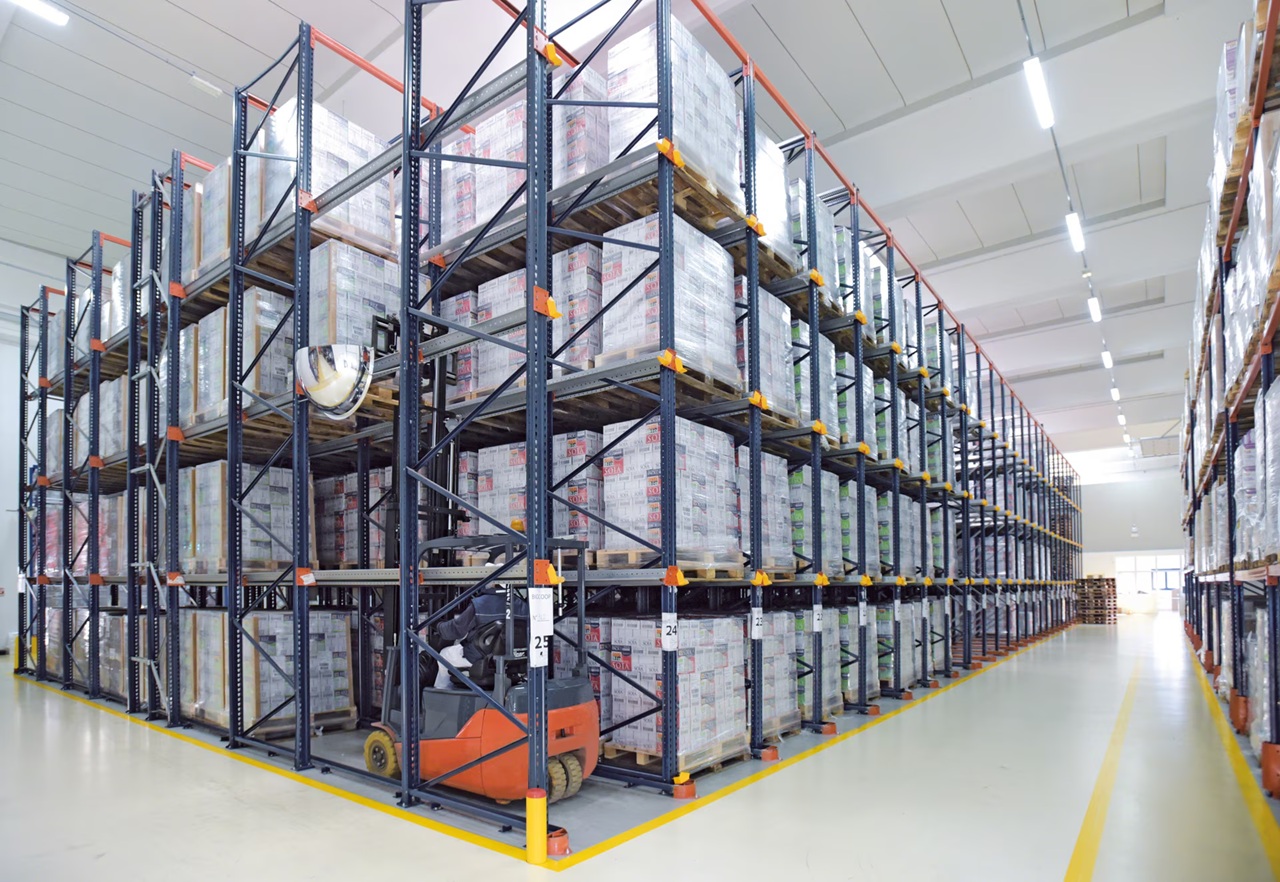
Deep storage lanes replace intermediate aisles. The forklift enters the structure to place and retrieve pallets.
Continuous rails, not beams
Pallets rest on rails carried by upright frames rather than individual beam levels, so a lane accepts pallet after pallet at the same elevation.
The truck enters the lane
The driver travels inside the bay to place or retrieve each load. Lane width, rail height, and mast clearance get dimensioned to that specific truck, not a generic one.
One open end or two
One open end gives LIFO and high storage density. Two open ends give FIFO with slightly fewer positions, since each lane now needs clearance from both sides.
Guarding built into the design
Guide rails, column guards, and rail-end protection are part of the spec from the start, because a lane that takes daily contact from forklifts needs protection built in from day one.
What a Drive-In Rack Project Includes
A drive-in rack project begins with a discussion of your inventory and handling goals. We consider the stored loads, their weight range, how often they move, and which items need immediate access. For Grand Prairie operations, check bulk lane utilization before reducing aisles around the Highway 360 corridor. That local layout consideration is evaluated alongside the system’s basic storage requirements rather than treated as a reason to choose the same rack for every building.
The CAD proposal shows the storage arrangement, usable levels, access routes, and pallet positions. Next we look at SKU depth. Drive-in rewards deep lanes of a single product and punishes variety - if a lane never fills, you've built an expensive way to store less than you could have with selective. Where the inventory profile is mixed, we'll usually recommend a hybrid: selective at the pick face, drive-in behind it for reserve. Where comparing two rack types is useful, the discussion explains what changes in access, rotation, and capacity. The result is a layout you can review with your operations team rather than a quantity of rack without an operating plan.
Your itemized quote identifies the rack structure, load-support components, and accessories included in the scope. Product availability, delivery, and installation are discussed before the order proceeds; the schedule depends on the selected system and project size. The quote itemizes frames, rails, rail supports, guide rails, and column protection, with a CAD drawing showing lane depth, rail elevations, and total positions. Installation partners anchor, plumb, and align every rail run, then verify a loaded pallet travels the full lane before handing the system over.
After approval, the project moves forward against the agreed layout and scope. The documentation provides a reference for storage assignments and rated capacities. If the inventory mix later changes, you can discuss additional pallet positions, a different lane arrangement, or a complementary rack type without assuming every existing component can be reused. Compatibility and capacity must be checked for the proposed configuration.
Recent Installations
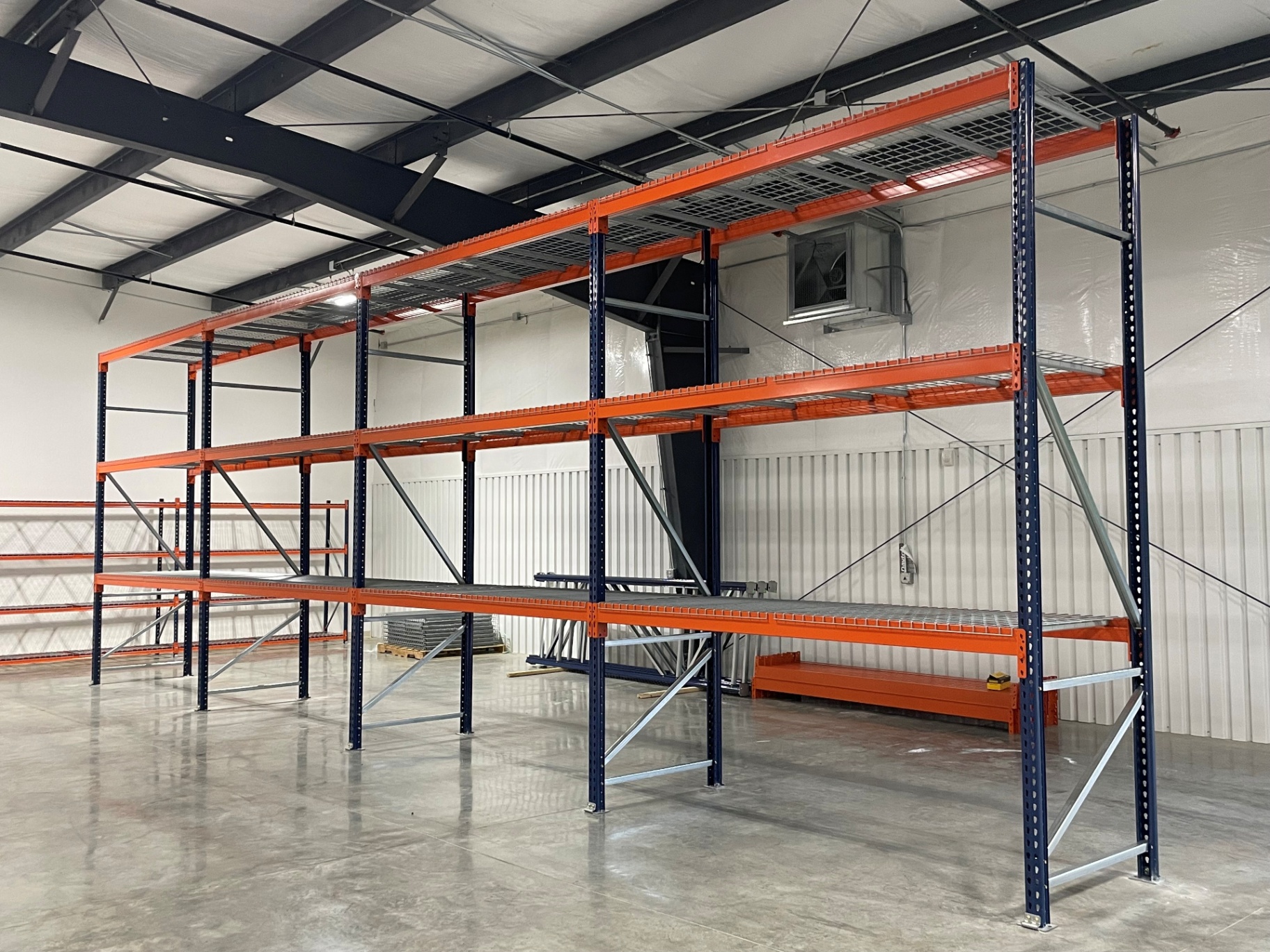
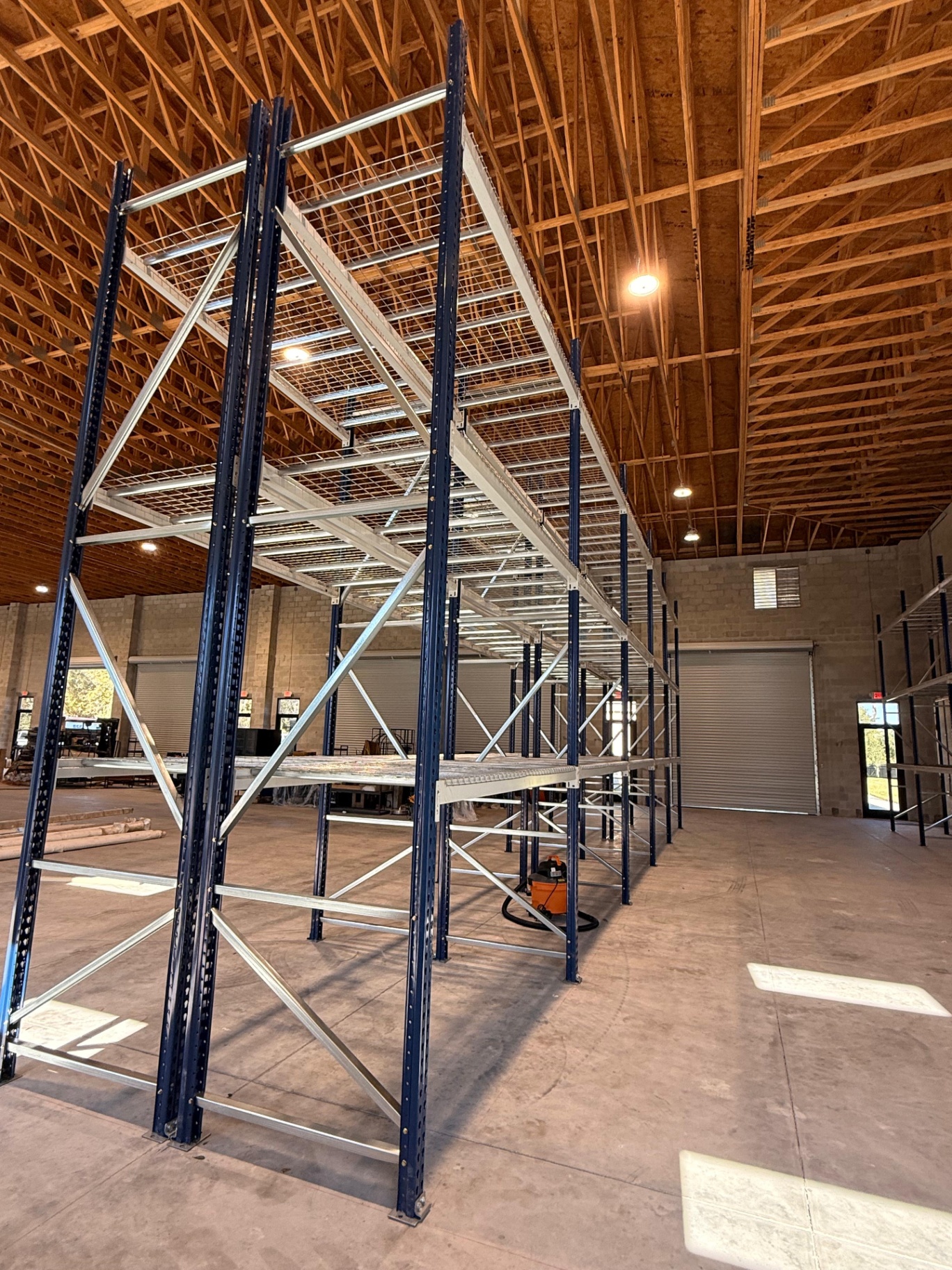
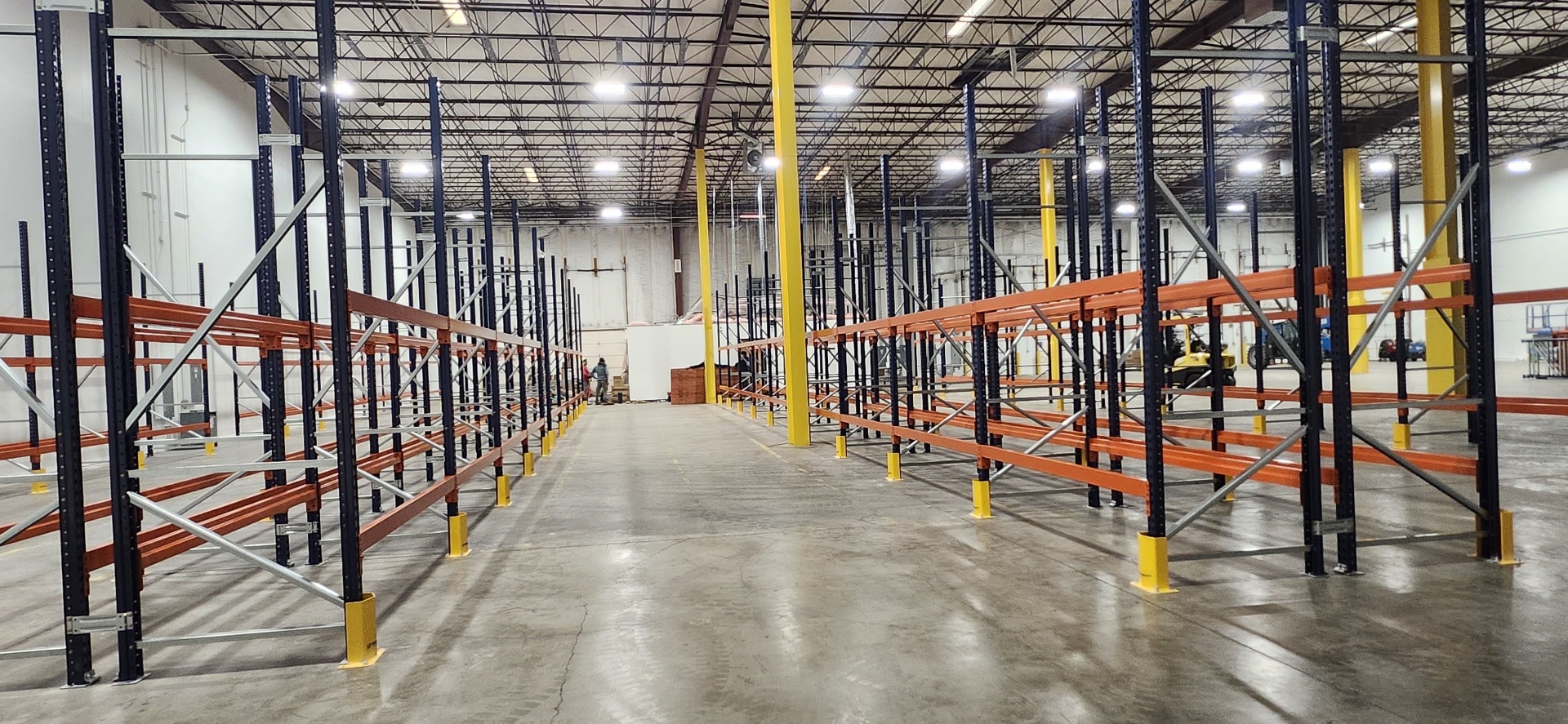
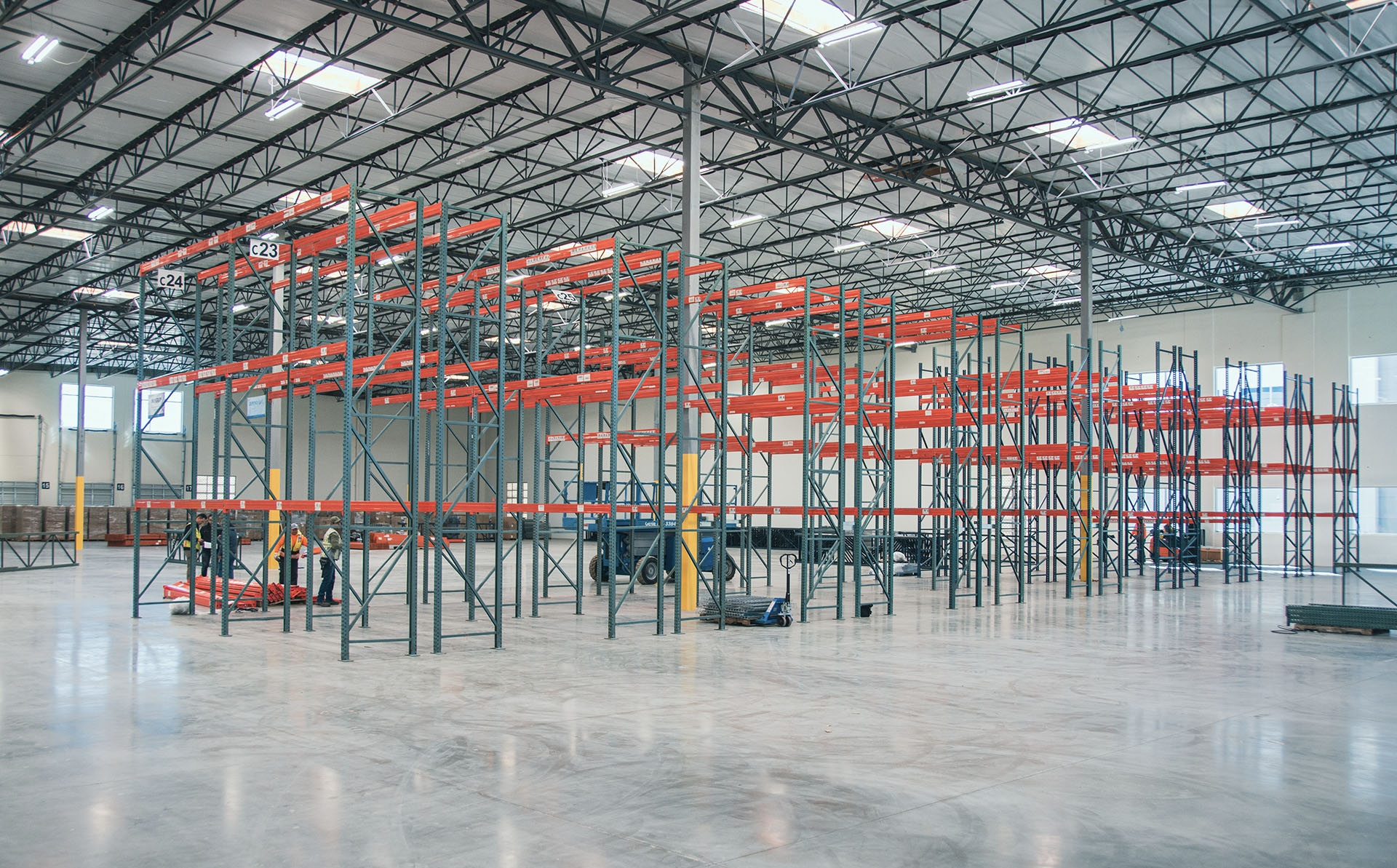
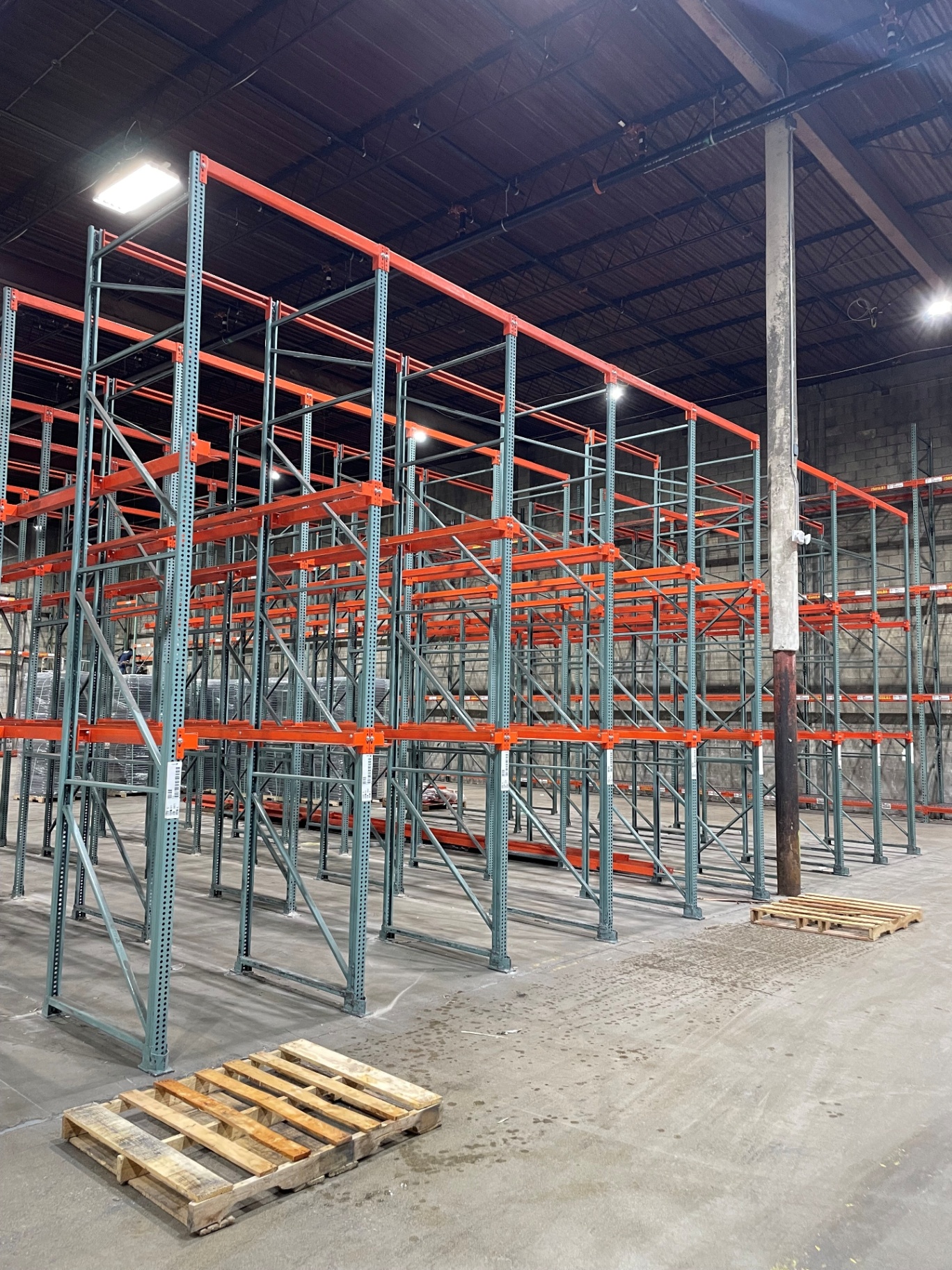
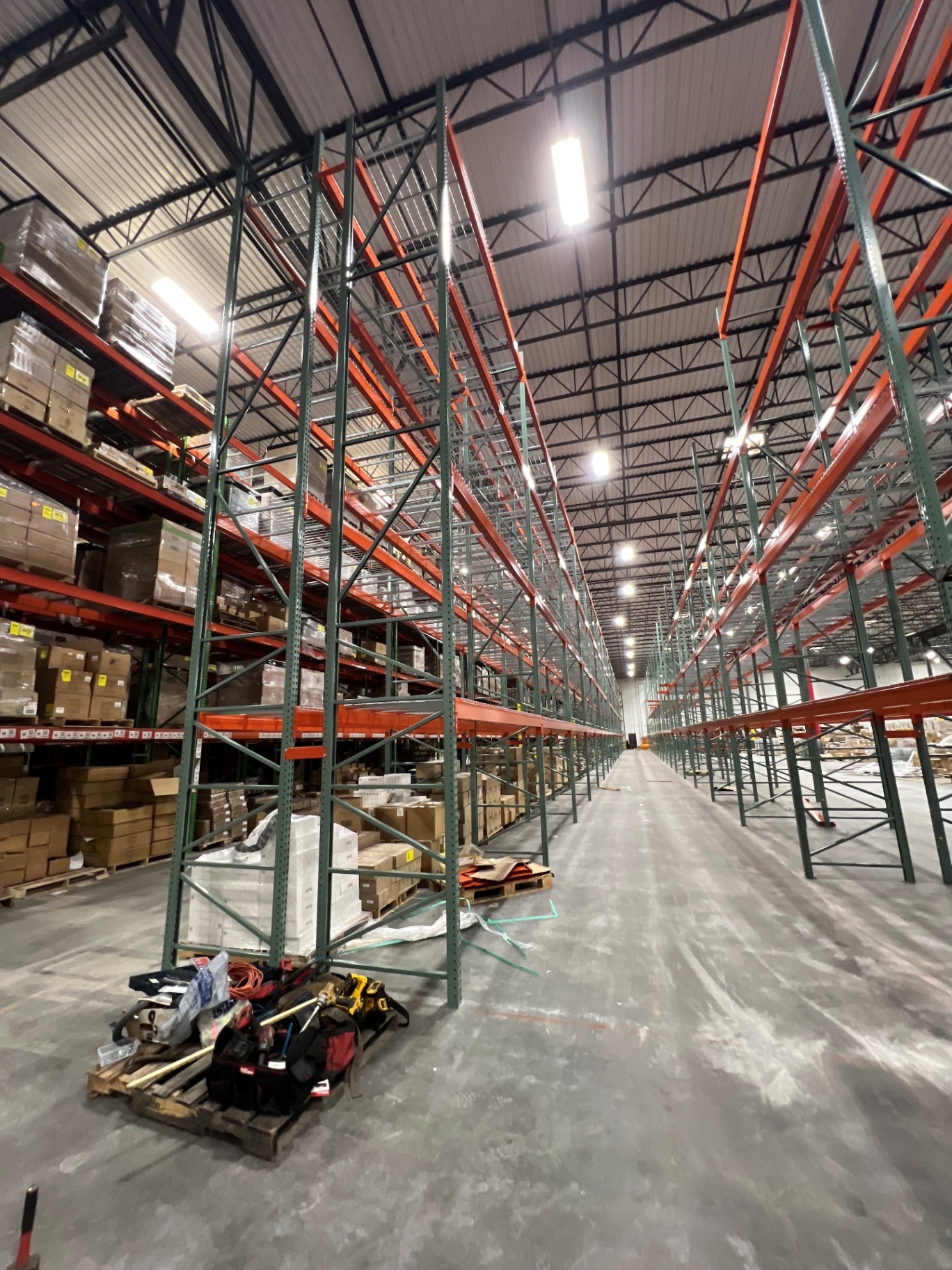
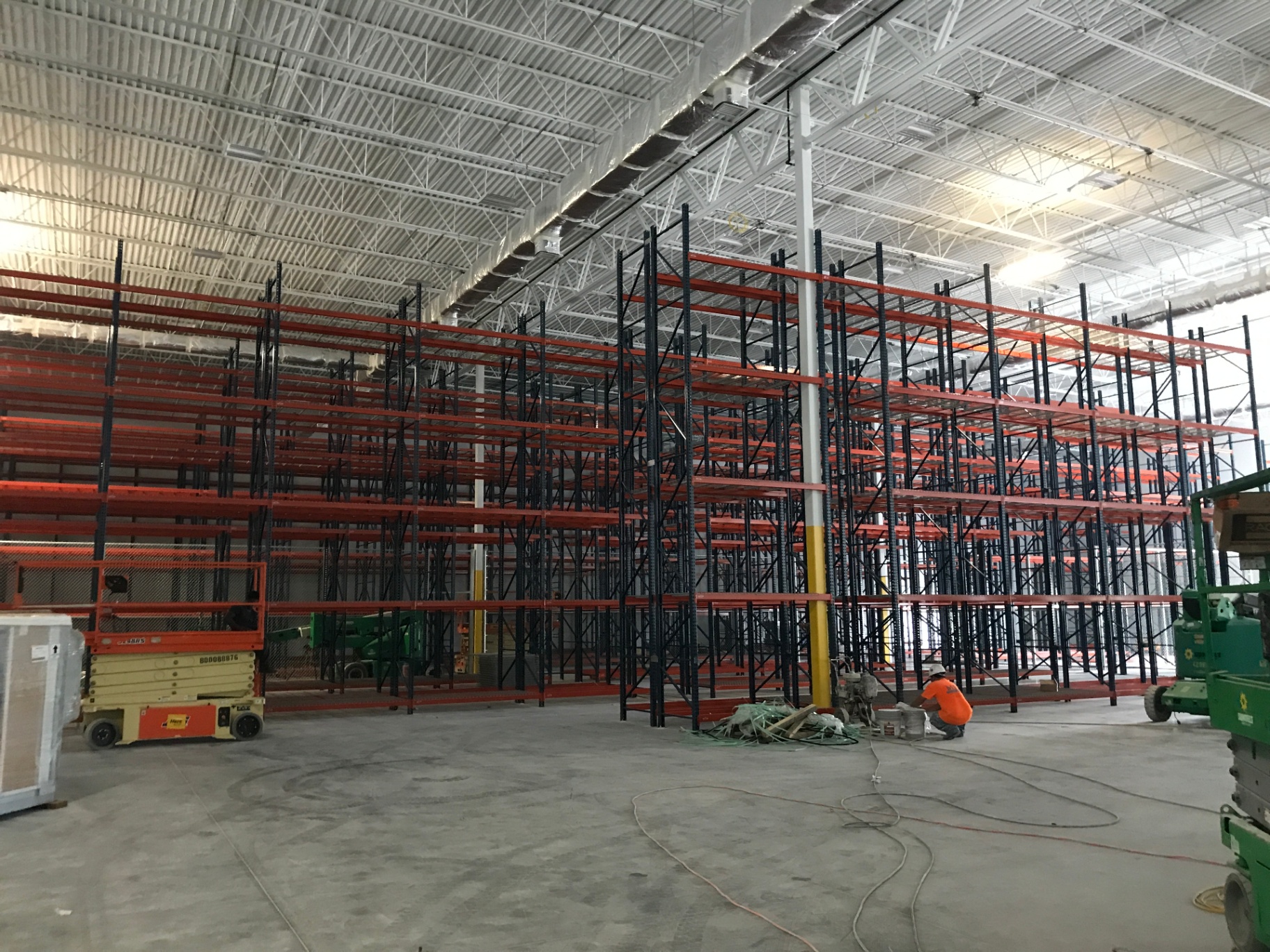
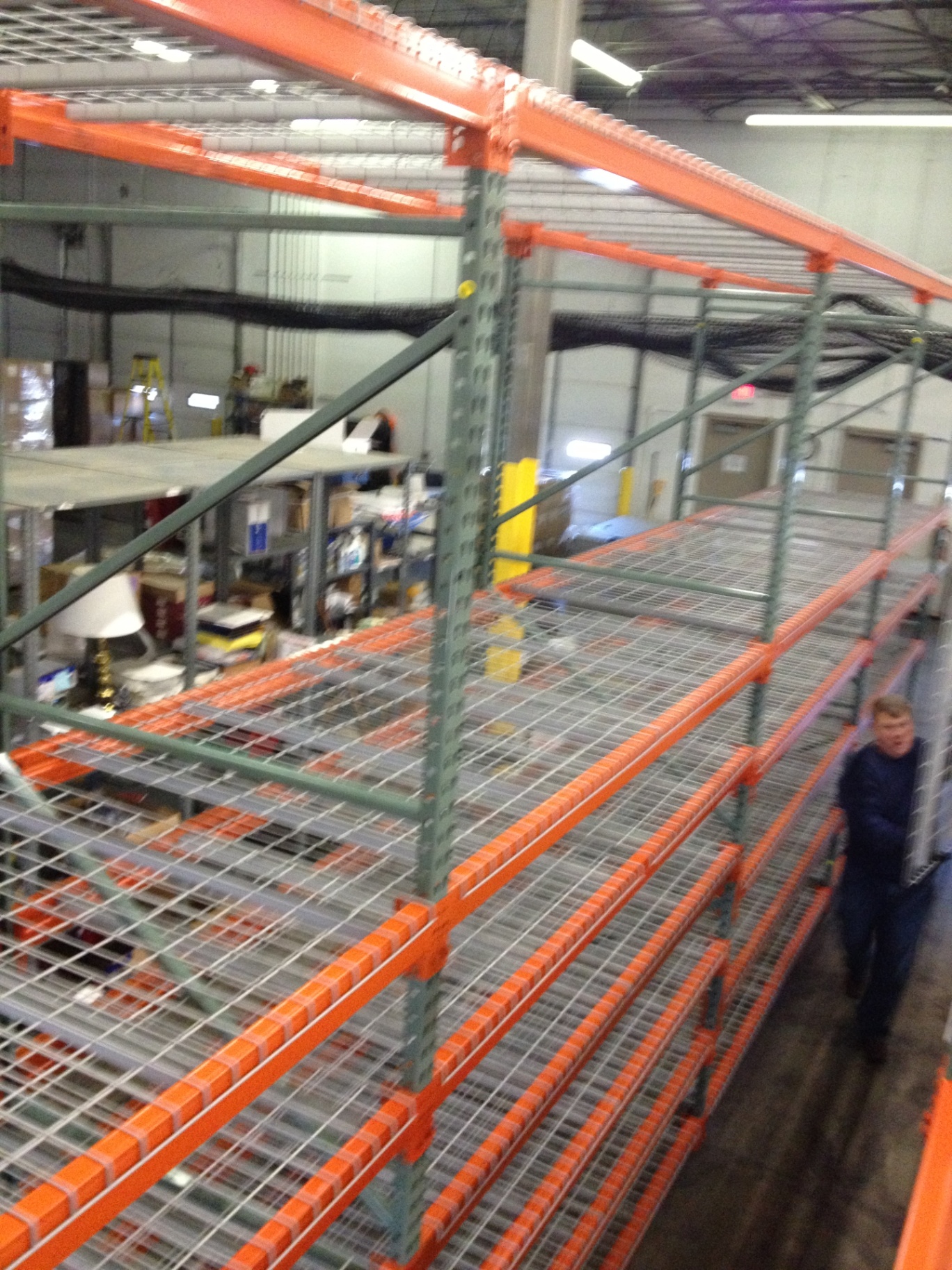
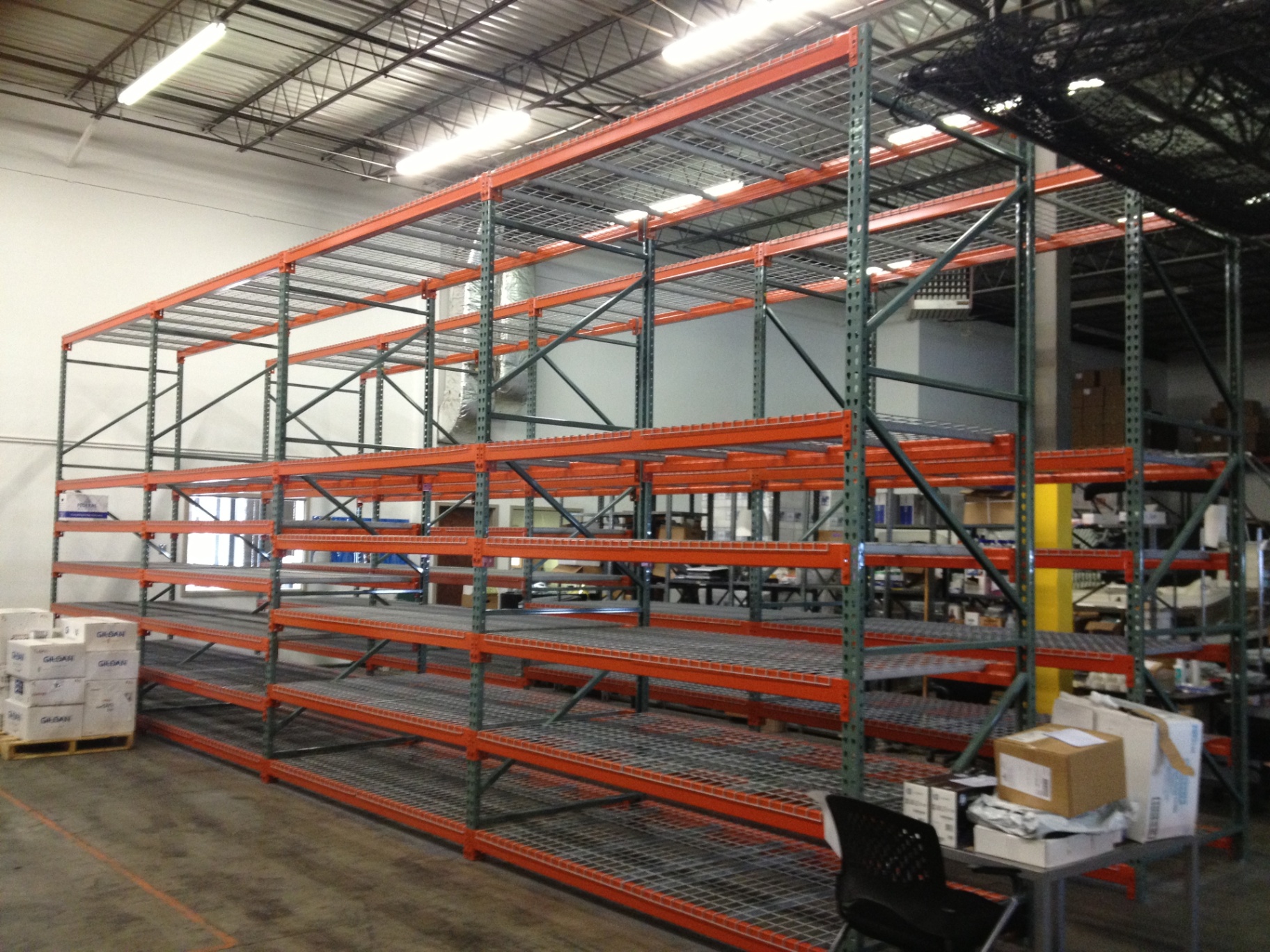
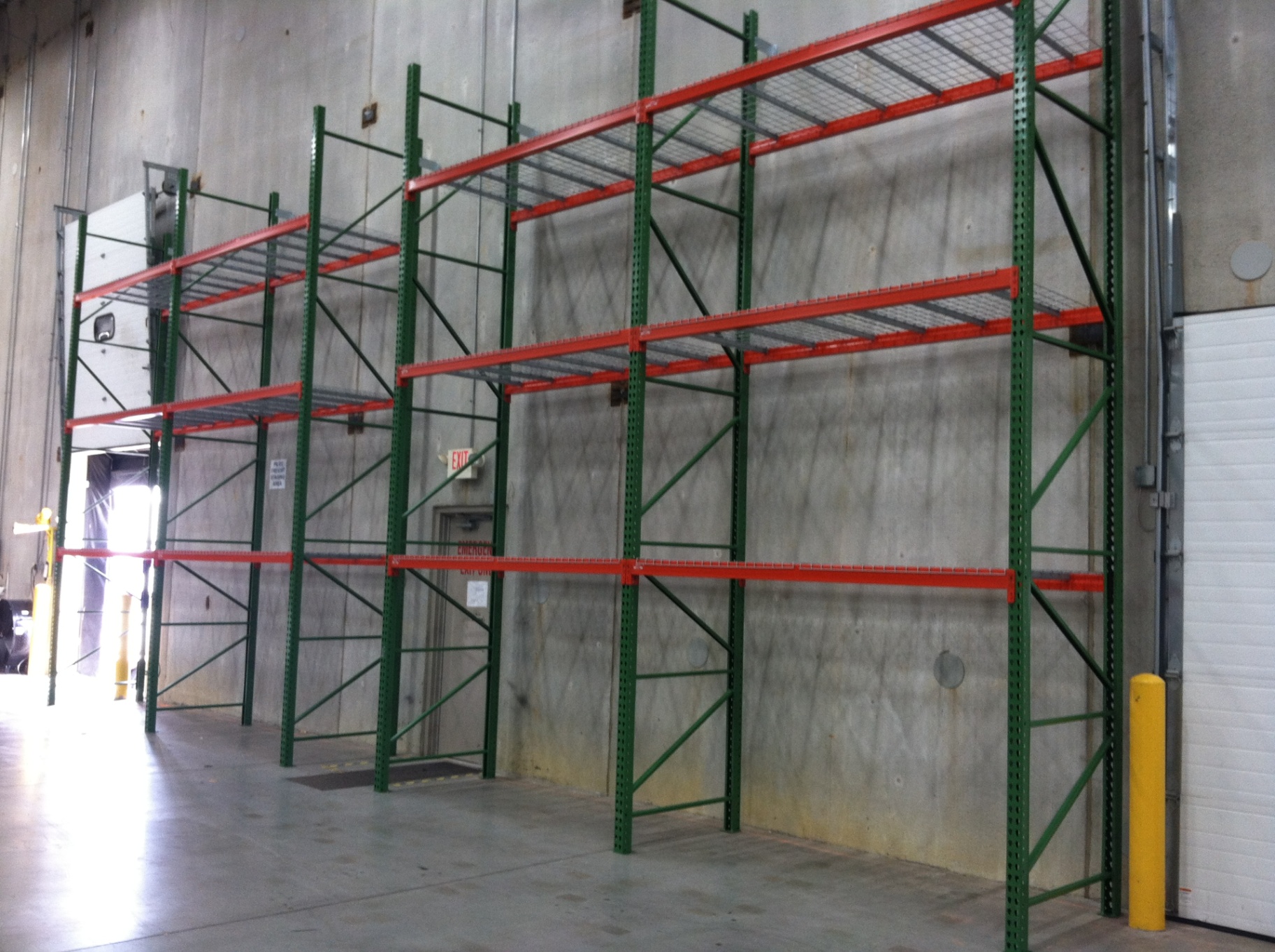
Racking projects completed for warehouses across Dallas–Fort Worth.
Get a Drive-In Rack Quote for Your Grand Prairie Warehouse
Send the basics and we will follow up with a layout and pricing. Prefer to talk it through? Call (214) 380-2954.
Dallas Pallet Racks
2442 S Collins St.
Ste 108 #2359
Arlington, TX 76014
(214) 380-2954Monday - Friday: 8:00 AM - 6:00 PM
Drive-In Rack Questions We Hear Most
How much floor space does drive-in rack actually save?
Trading aisles for lanes typically shrinks the footprint for the same pallet count by roughly a third, sometimes more in a taller building. We give you the side-by-side numbers in the layout rather than a rule of thumb.
What's the difference between drive-in and drive-through rack?
Drive-in is open at one end and runs LIFO - highest density. Drive-through is open at both ends and allows FIFO, at the cost of some positions and a second access aisle.
Does drive-in slow down put-away?
It can, since the truck has to travel into the lane for every pallet. It works best for bulk moves rather than piece picking - pairing it with a selective pick face keeps daily order fulfillment from bogging down.
How do you keep lift trucks from damaging the rack?
Floor-mounted guide rails steer the truck through the lane, and column guards plus rail-end protection absorb the contact that still happens. Both get specified with the system up front, not bolted on after the first impact.
Can a drive-in system be reconfigured later?
Rail elevations can be reset for a different pallet height, and lanes shortened or added. If SKU count grows enough that lanes stop filling, sections can be converted back toward selective racking.
How should Grand Prairie drive-in lane depth reflect daily dispatch quantities?
Compare inventory after dispatch as well as after receiving. If a lane often holds only a few pallets, nominal deep capacity may not be used; another depth or rack type may be a better comparison.
How should a Great Southwest dispatch zone be positioned beside drive-in rack?
Place order consolidation beyond the storage access route. Goods awaiting collection should not become a temporary barrier between the rack and the next inventory release. Use lane assignments for homogeneous reserve lots and preserve another storage area for mixed releases. Evaluate truck access, pallet supports, and normal lane fill together, with staging outside the entry rather than inside the operating approach.
What should a Grand Prairie warehouse compare when production and distribution share drive-in rack?
Separate the quantities released to production from goods stored for shipment. A single position count cannot show whether both kinds of movement remain possible in the proposed arrangement. Compare inventory after dispatch as well as after receiving. If a lane often holds only a few pallets, nominal deep capacity may not be used; another depth or rack type may be a better comparison.
Other Rack Types We Supply in Grand Prairie
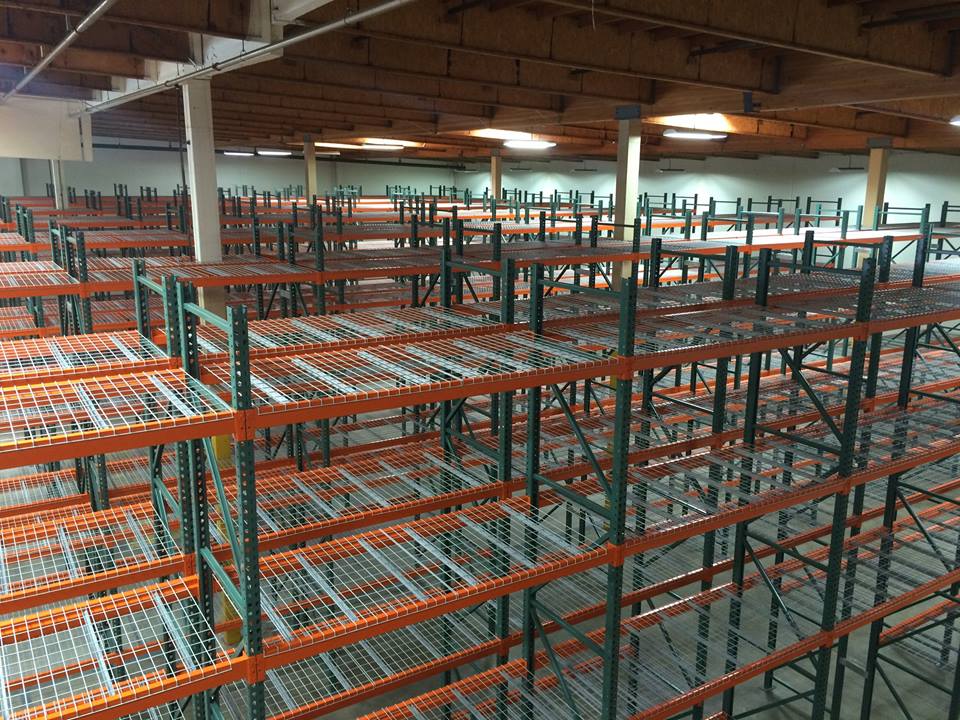
Pallet Rack
Every pallet reachable, every time. The baseline we size everything else against.
View details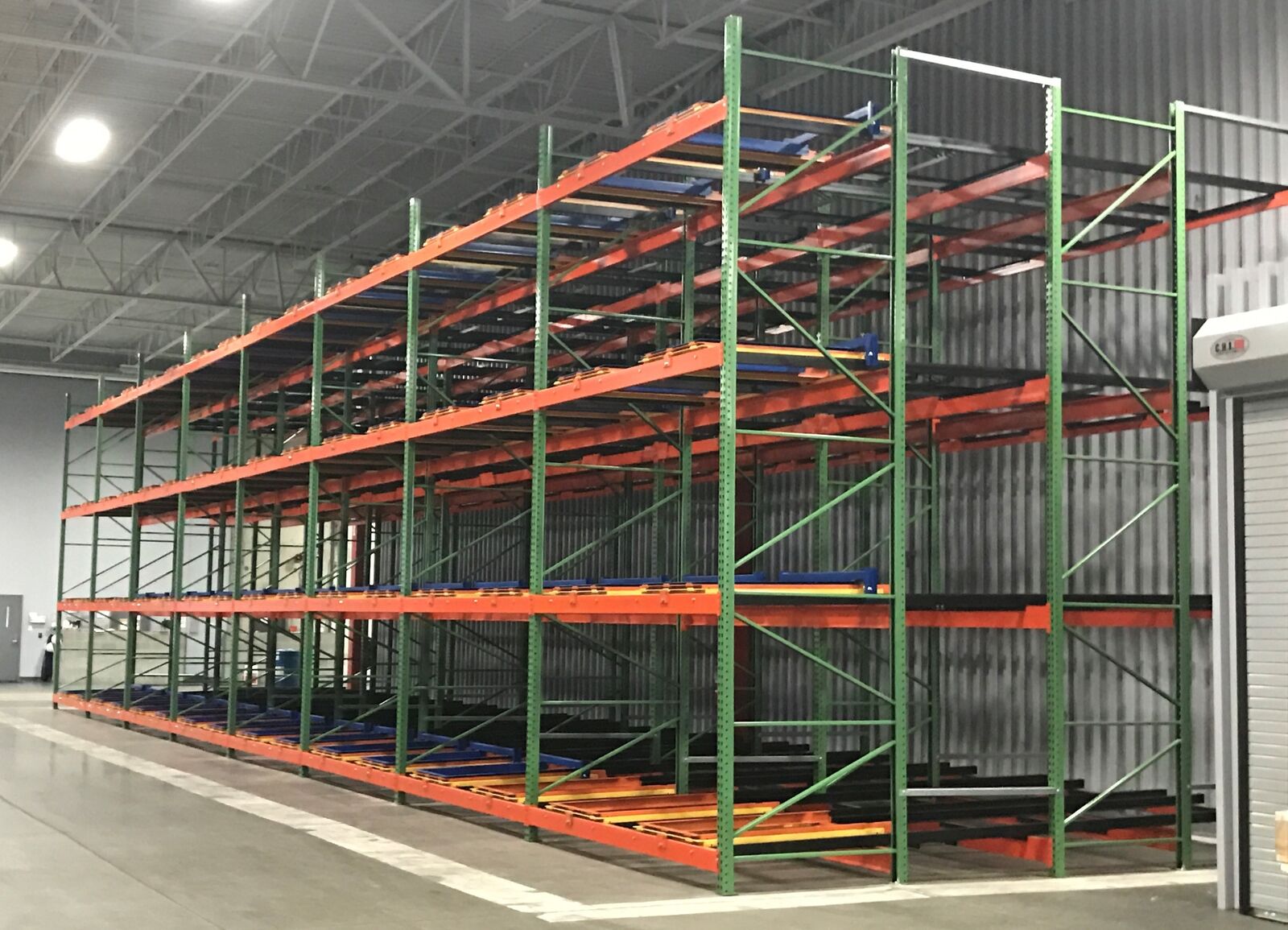
Pushback Rack
Two to six pallets deep from one aisle, without giving up much reach.
View details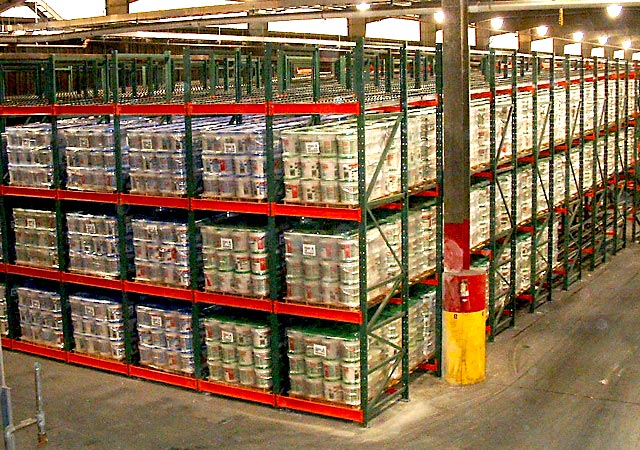
Pallet Flow Rack
Load one side, pick the other, and let gravity enforce first in, first out.
View details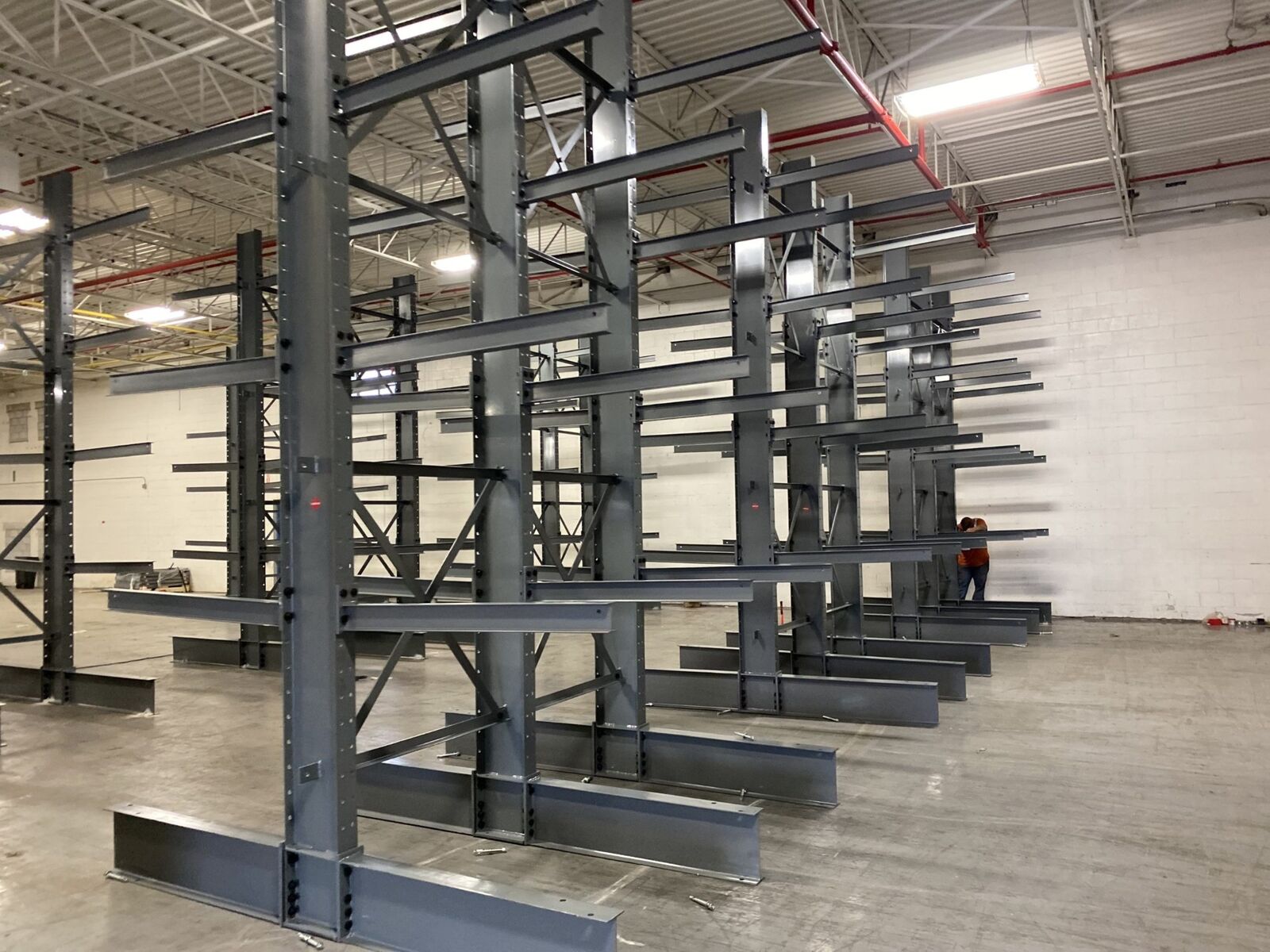
Cantilever Rack
Arms with nothing in front of them, built for lumber, pipe, and anything a pallet can't hold.
View details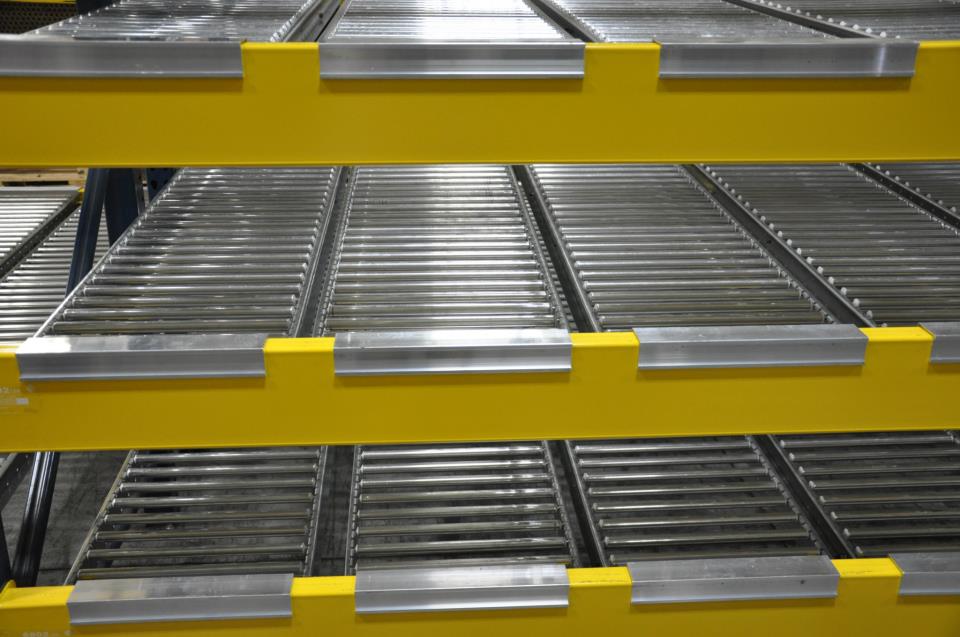
Carton Flow Rack
Cases advance to the picker instead of the picker hunting for cases.
View detailsNearby Areas We Also Serve
We serve the Dallas–Fort Worth metroplex with storage layouts, rack supply, and installation. Compare the same rack type in another service area below.
Where We Work
Based in Arlington, we serve the DFW metroplex with industrial pallet racks and warehouse storage solutions.
Dallas Pallet Racks
Address
2442 S Collins St.
Ste 108 #2359
Arlington, TX 76014
Phone
(214) 380-2954Business Hours
Monday - Friday: 8:00 AM - 6:00 PM
Saturday: Closed
Sunday: Closed
Need Drive-In Rack in Grand Prairie?
Call (214) 380-2954 or request a quote and we will get a layout started.