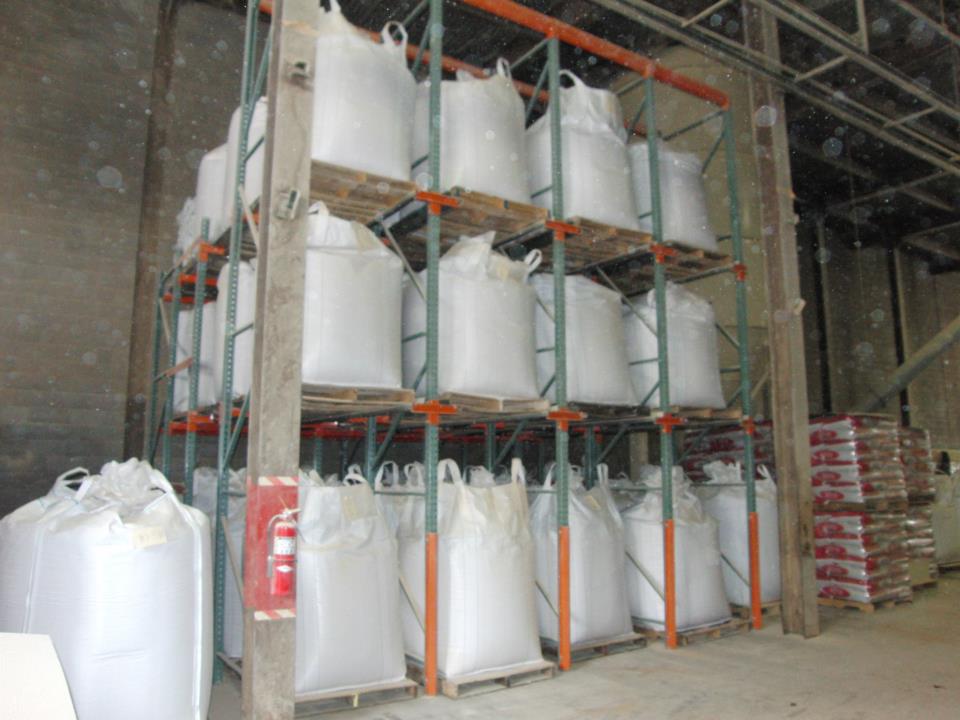
Drive-In Rack in Dallas, TX
A Dallas storage decision can involve two very different jobs: keeping reserve inventory near the freight network and filling smaller orders from the same building. The Dallas Inland Port and the I-35E corridor provide useful geographic reference points, but the warehouse's daily mix of receipts and releases should lead the rack decision.
A Dallas reserve warehouse holding repeated full-pallet lots can devote too much floor area to aisles between identical items. Drive-in rack concentrates suitable stock into lanes the forklift enters. The question is whether those lanes suit the release pattern, especially when outbound freight is assembled separately for several destinations.
Compare drive-in rack with a Free Design Consultation, CAD layout, and itemized quote from Dallas Pallet Racks, a division of Warehouse Equipment & Supplies Co.
Why Dallas Warehouses Work With Us
Start with the difference between a reserve warehouse and a picking operation. A Dallas facility serving freight moving through the Inland Port may hold complete pallet lots, while a parts distributor near Stemmons can need individual items throughout the day. Those are different access requirements, even when the buildings have similar floor areas.
Our Free Design Consultation puts that distinction into a CAD layout rather than assuming one arrangement belongs everywhere. Discuss which inventory can share a storage lane and which must remain directly reachable. Receiving, put-away, picking, and dispatch should each have a place in the drawing; otherwise a larger storage count can conceal a handling problem.
For a building connected to I-30 or I-35E, keep the dispatch area in the discussion as well. We provide an itemized quote so your team can compare the proposed storage with the access it gives up before committing to the system.
Assign deep lanes to repeat pallet lots, not assorted partial quantities. Keep dispatch staging outside the lane entry, compare normal lane fill with peak fill, and retain selective positions for stock that needs immediate individual access.

Operations We Rack Around Here
Serving warehouses around Stemmons Corridor, South Dallas, Pinnacle Park, Mountain Creek, Trinity Industrial.
How Drive-In Rack Works
Deep storage lanes replace intermediate aisles. The forklift enters the structure to place and retrieve pallets.
Continuous rails, not beams
Pallets rest on rails carried by upright frames rather than individual beam levels, so a lane accepts pallet after pallet at the same elevation.
The truck enters the lane
The driver travels inside the bay to place or retrieve each load. Lane width, rail height, and mast clearance get dimensioned to that specific truck, not a generic one.
One open end or two
One open end gives LIFO and high storage density. Two open ends give FIFO with slightly fewer positions, since each lane now needs clearance from both sides.
Guarding built into the design
Guide rails, column guards, and rail-end protection are part of the spec from the start, because a lane that takes daily contact from forklifts needs protection built in from day one.
What a Drive-In Rack Project Includes
A drive-in rack project begins with a discussion of your inventory and handling goals. We consider the stored loads, their weight range, how often they move, and which items need immediate access. For Dallas operations, leave circulation between storage and dispatch areas in Mountain Creek layouts. That local layout consideration is evaluated alongside the system’s basic storage requirements rather than treated as a reason to choose the same rack for every building.
The CAD proposal shows the storage arrangement, usable levels, access routes, and pallet positions. Next we look at SKU depth. Drive-in rewards deep lanes of a single product and punishes variety - if a lane never fills, you've built an expensive way to store less than you could have with selective. Where the inventory profile is mixed, we'll usually recommend a hybrid: selective at the pick face, drive-in behind it for reserve. Where comparing two rack types is useful, the discussion explains what changes in access, rotation, and capacity. The result is a layout you can review with your operations team rather than a quantity of rack without an operating plan.
Your itemized quote identifies the rack structure, load-support components, and accessories included in the scope. Product availability, delivery, and installation are discussed before the order proceeds; the schedule depends on the selected system and project size. The quote itemizes frames, rails, rail supports, guide rails, and column protection, with a CAD drawing showing lane depth, rail elevations, and total positions. Installation partners anchor, plumb, and align every rail run, then verify a loaded pallet travels the full lane before handing the system over.
After approval, the project moves forward against the agreed layout and scope. The documentation provides a reference for storage assignments and rated capacities. If the inventory mix later changes, you can discuss additional pallet positions, a different lane arrangement, or a complementary rack type without assuming every existing component can be reused. Compatibility and capacity must be checked for the proposed configuration.
Recent Installations
Racking projects completed for warehouses across Dallas–Fort Worth.


Get a Drive-In Rack Quote for Your Dallas Warehouse
Send the basics and we will follow up with a layout and pricing. Prefer to talk it through? Call (214) 380-2954.
Dallas Pallet Racks
2442 S Collins St.
Ste 108 #2359
Arlington, TX 76014
(214) 380-2954Monday - Friday: 8:00 AM - 6:00 PM
Drive-In Rack Questions We Hear Most
How much floor space does drive-in rack actually save?
Trading aisles for lanes typically shrinks the footprint for the same pallet count by roughly a third, sometimes more in a taller building. We give you the side-by-side numbers in the layout rather than a rule of thumb.
What's the difference between drive-in and drive-through rack?
Drive-in is open at one end and runs LIFO - highest density. Drive-through is open at both ends and allows FIFO, at the cost of some positions and a second access aisle.
Does drive-in slow down put-away?
It can, since the truck has to travel into the lane for every pallet. It works best for bulk moves rather than piece picking - pairing it with a selective pick face keeps daily order fulfillment from bogging down.
How do you keep lift trucks from damaging the rack?
Floor-mounted guide rails steer the truck through the lane, and column guards plus rail-end protection absorb the contact that still happens. Both get specified with the system up front, not bolted on after the first impact.
Can a drive-in system be reconfigured later?
Rail elevations can be reset for a different pallet height, and lanes shortened or added. If SKU count grows enough that lanes stop filling, sections can be converted back toward selective racking.
Does drive-in rack suit bulk lots at the Dallas Inland Port?
It can suit repeated pallets of the same product where lane-based retrieval is acceptable. Standard drive-in arrangements generally use last-in, first-out access; mixed destination orders should not depend on reaching a blocked pallet.
How should an Inland Port warehouse separate freight staging from drive-in rack?
A receipt awaiting put-away and an outbound load awaiting collection need floor space outside the storage system. Keep those temporary loads visible in the plan rather than counting the dock area as permanent reserve capacity. Assign deep lanes to repeat pallet lots, not assorted partial quantities. Keep dispatch staging outside the lane entry, compare normal lane fill with peak fill, and retain selective positions for stock that needs immediate individual access.
What should a Stemmons operation compare before replacing aisle space with drive-in rack?
Compare ordinary inventory with shipment peaks, and retain access to the items that leave in smaller quantities. The drawing should distinguish a working aisle from a storage position. It can suit repeated pallets of the same product where lane-based retrieval is acceptable. Standard drive-in arrangements generally use last-in, first-out access; mixed destination orders should not depend on reaching a blocked pallet.
Other Rack Types We Supply in Dallas
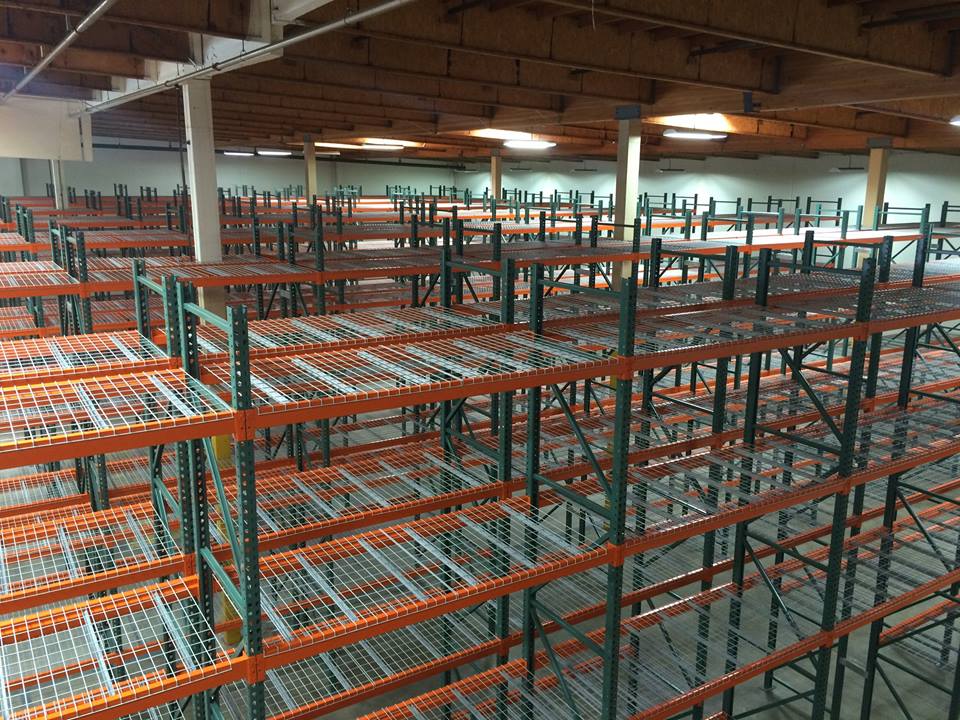
Pallet Rack
Every pallet reachable, every time. The baseline we size everything else against.
View details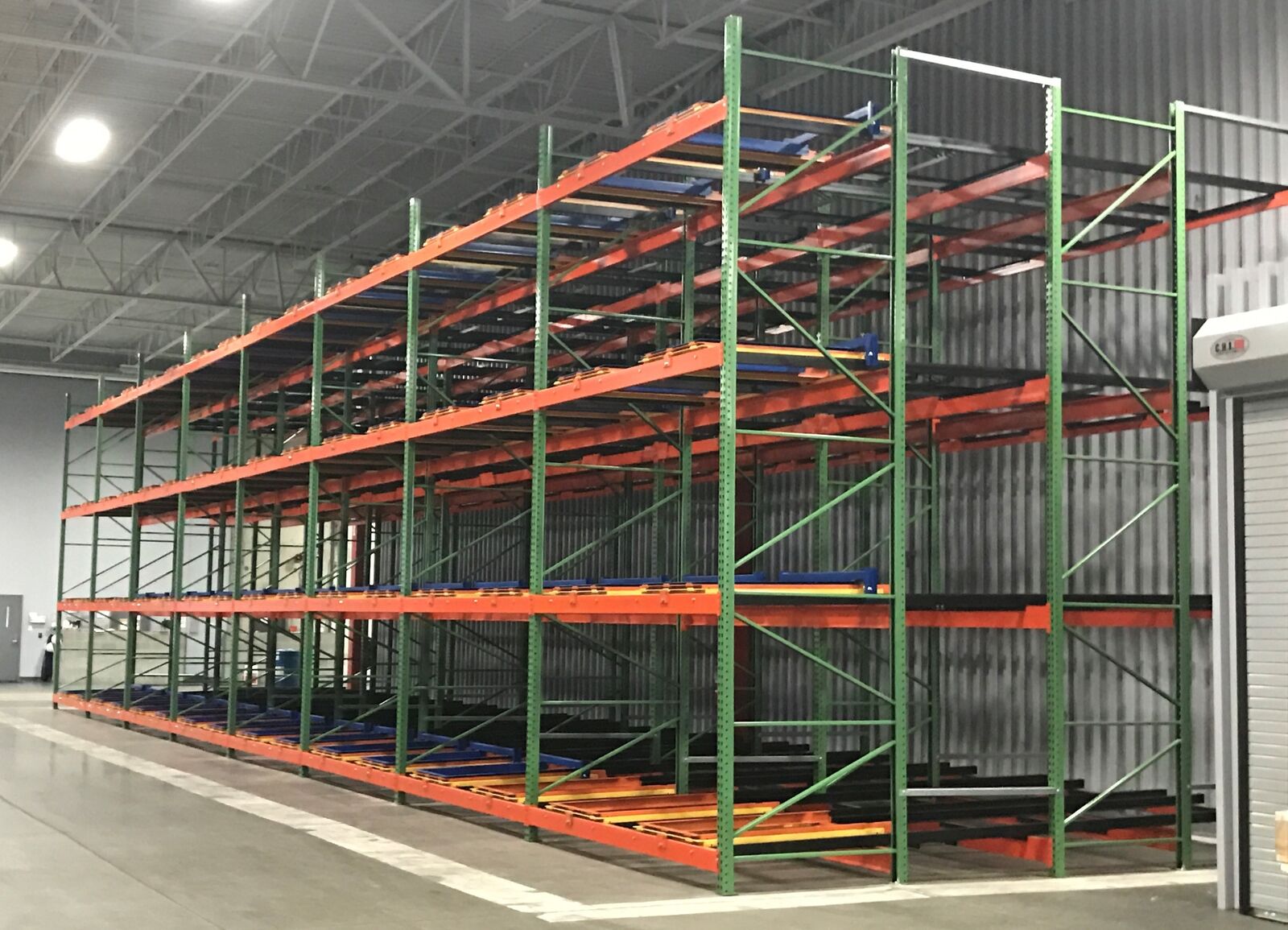
Pushback Rack
Two to six pallets deep from one aisle, without giving up much reach.
View details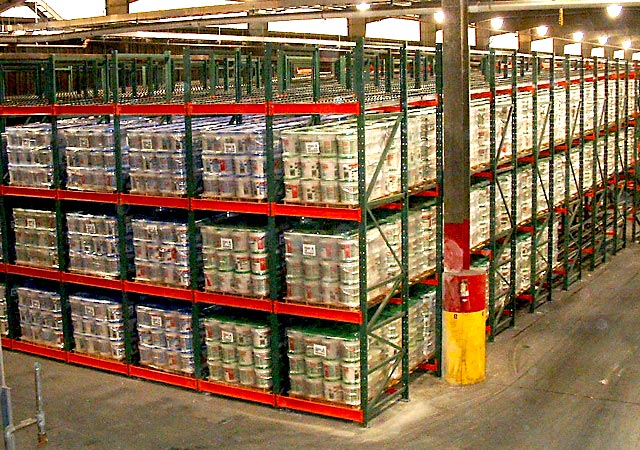
Pallet Flow Rack
Load one side, pick the other, and let gravity enforce first in, first out.
View details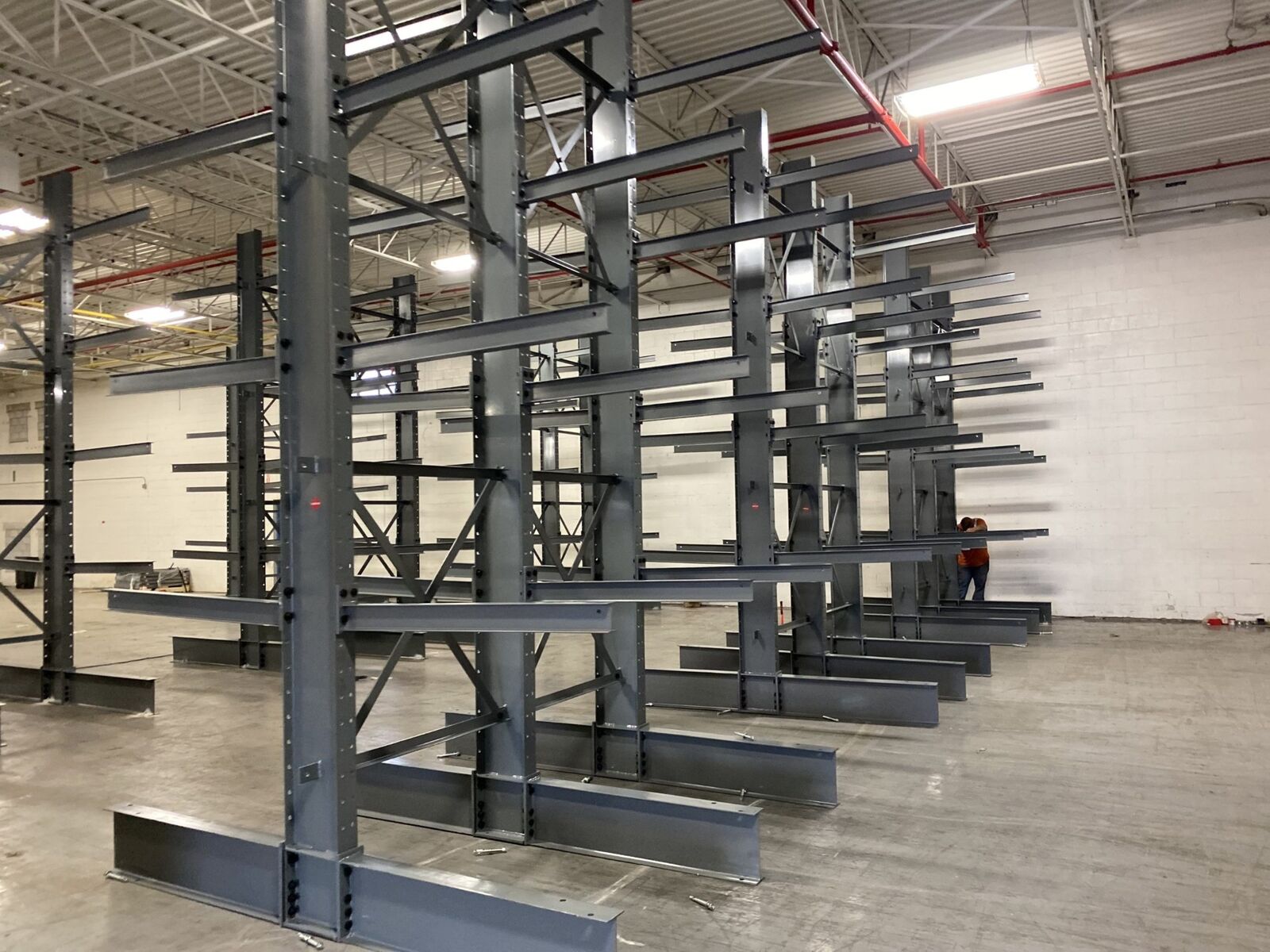
Cantilever Rack
Arms with nothing in front of them, built for lumber, pipe, and anything a pallet can't hold.
View details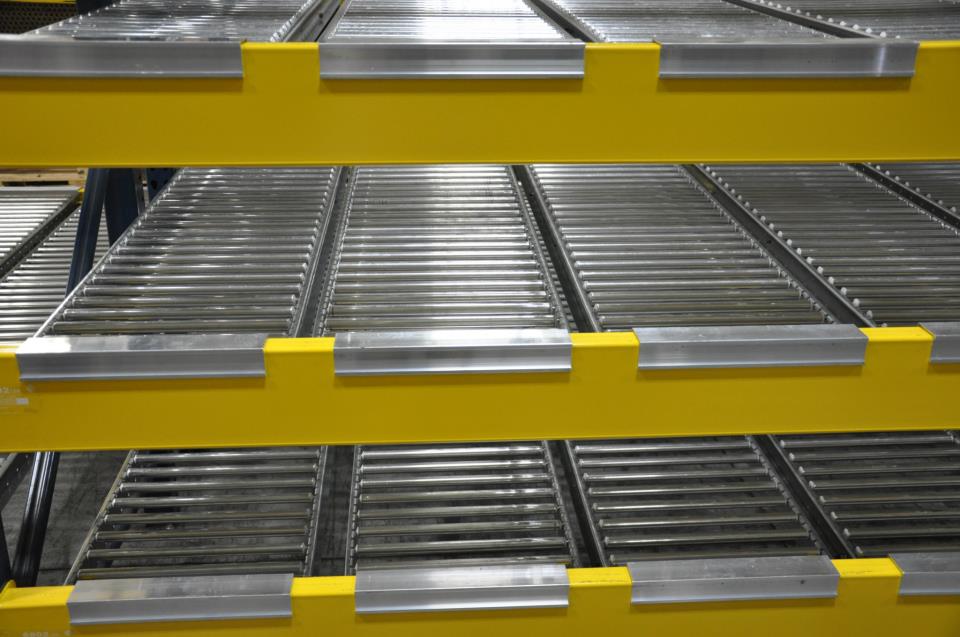
Carton Flow Rack
Cases advance to the picker instead of the picker hunting for cases.
View detailsNearby Areas We Also Serve
We serve the Dallas–Fort Worth metroplex with storage layouts, rack supply, and installation. Compare the same rack type in another service area below.
Where We Work
Based in Arlington, we serve the DFW metroplex with industrial pallet racks and warehouse storage solutions.
Dallas Pallet Racks
Address
2442 S Collins St.
Ste 108 #2359
Arlington, TX 76014
Phone
(214) 380-2954Business Hours
Monday - Friday: 8:00 AM - 6:00 PM
Saturday: Closed
Sunday: Closed
Need Drive-In Rack in Dallas?
Call (214) 380-2954 or request a quote and we will get a layout started.